Cold Plunge Safety: The Page to Read First
Cold plunging is safe for most healthy people when the dose is sane. It is also a deliberate cardiovascular stress, which is exactly why it works and exactly why a small group of people should not do it at all. The wellness industry mumbles this part. We won't.
What Cold Shock Actually Is
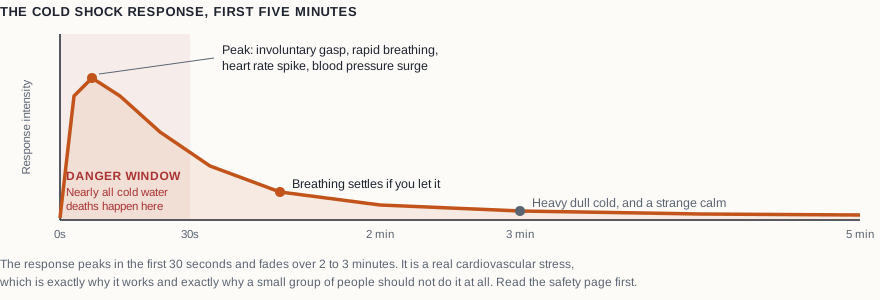
The moment cold water hits your skin, your body fires the cold shock response: an involuntary gasp, rapid breathing, a spike in heart rate, and a surge in blood pressure as surface blood vessels clamp shut. It peaks in the first 30 seconds and fades over 2 to 3 minutes. The American Heart Association has warned plainly that this response puts real strain on the heart, and those first three minutes are when nearly all cold water deaths happen, mostly by drowning after an uncontrolled gasp, or by cardiac events in people with existing disease.
There's a second, less famous mechanism called autonomic conflict: cold on the face triggers the dive reflex (slow down) at the same time cold shock fires the accelerator (speed up). Two opposing commands hitting the heart at once can trigger rhythm disturbances, which is one reason face-dunking and breath-holds in cold water deserve respect, and why people with arrhythmias are on the do-not-plunge list.
Who Should Not Cold Plunge
Do not start this practice without explicit clearance from your doctor if any of these apply:
- Coronary artery disease, angina, or any history of heart attack. Cold causes coronary vasoconstriction at the same moment it raises the heart's oxygen demand. That combination is the textbook setup for a cardiac event.
- Arrhythmias, diagnosed or suspected, including atrial fibrillation and long QT.
- Heart failure of any grade.
- Uncontrolled high blood pressure. The immersion spike stacks on top of your baseline.
- Beta blockers or blood pressure medication. Not an automatic no, but these blunt your body's ability to respond to the shock. Doctor first.
- History of stroke or aneurysm.
- Raynaud's syndrome, cold urticaria, or cryoglobulinemia. Your body already overreacts to cold.
- Epilepsy or seizure history. A seizure in water is a drowning risk, full stop.
- Pregnancy.
- Under 18, and recent surgery or open wounds.
If you're healthy and just nervous, that's different. Nerves are normal and the first 30 days plan is built around them.
The Non-Negotiable Rules
- Never plunge alone. Not because the water is deep, but because the rare bad outcomes (arrhythmia, fainting, gasp-aspiration) are survivable with someone there and frequently fatal without. Someone in the house who knows you're in the water is the minimum.
- Never hyperventilate before or during cold exposure. Breath-work before immersion lowers CO2, which can switch off the urge to breathe and cause shallow-water blackout. This kills experienced, fit people. Calm breathing only.
- Keep your head above water as a beginner. Face immersion adds the dive-reflex conflict. Earn it slowly, much later.
- No alcohol before plunging. It impairs the shock response, dilates surface vessels, and accelerates heat loss. Beer after, if you must, not before.
- Get out on the first sign of real trouble: chest pain, light-headedness, breathing that won't settle after a minute, or uncontrolled shivering in the water.
- Respect the time caps on the temperature chart. They're ceilings, not goals.
After You Get Out: Afterdrop
Your core temperature keeps falling for several minutes after you exit, as cold blood from your limbs returns to circulation. This is afterdrop, and it's why people feel fine at the tub and woozy in the kitchen. Handle it the boring way: towel off, dry warm clothes, and gentle movement. Walking, easy squats, arm swings. Save the sprint to a hot shower; beyond blunting the adaptation (see the protocol), rapid surface rewarming can make the dizziness worse.
Home Setup Safety
- Electricity and water: any chiller or pump plugs into a GFCI outlet, no exceptions. If you're considering a chest freezer conversion, read the budget setups page first; it's the one DIY route with real electrical risk, and there's a hard rule: the unit is unplugged before anyone touches the water.
- Lids and kids: a tub of water is a drowning hazard for small children whether or not it's cold. Lock or strap the lid. Most lids, including the Cold Pod's, are not childproof.
- Water hygiene: cold slows but doesn't stop microbial growth. Filter, treat, or change the water on a schedule. Covered on the accessories page. If you're already seeing white stringy flakes or a slick film at the waterline, that's a plumbing biofilm and it needs a purge, not a scrub: see white water mold.
The Honest Frame
The fatality risk for a screened, healthy adult doing 2 to 4 minutes at 50 to 55°F with someone nearby is very low. The injury risk is mostly slips on wet concrete. Nearly every cold water tragedy in the data involves one of: unscreened heart disease, alcohol, solo immersion, breath-holding games, or open water. Eliminate those five and you've eliminated most of the danger. That's what this page is for. Now go read the protocol.
Keep the rules next to the water
The printable one-page protocol includes every safety rule on this page, plus the temps, times, and weekly dose.
Download the protocol PDF